An Online Gamified PLE that Actually Motivates Us
(Unfortunately the gamification part is purely imaginary. 😓)
 |
| An Example of Personal Learning Environment with many software and websites you can choose from. |
8am - Time for morning language learning. I start the timer in the app and try to feed myself some German vocabularies. I know while I’m learning, my avatar is also earning in-game currency and leveling up. 30 vocabularies later, I share my progress of the day on Wechat with caption “how in the world can a word as simple as ‘soda’ be ‘das Erfrischungsgetränk’”. I receive a couple likes.
 |
| Pomodoro Timing Technique: Work for 25 mins without distractions, then break for 5 mins. It's very useful to get you start at the task. |
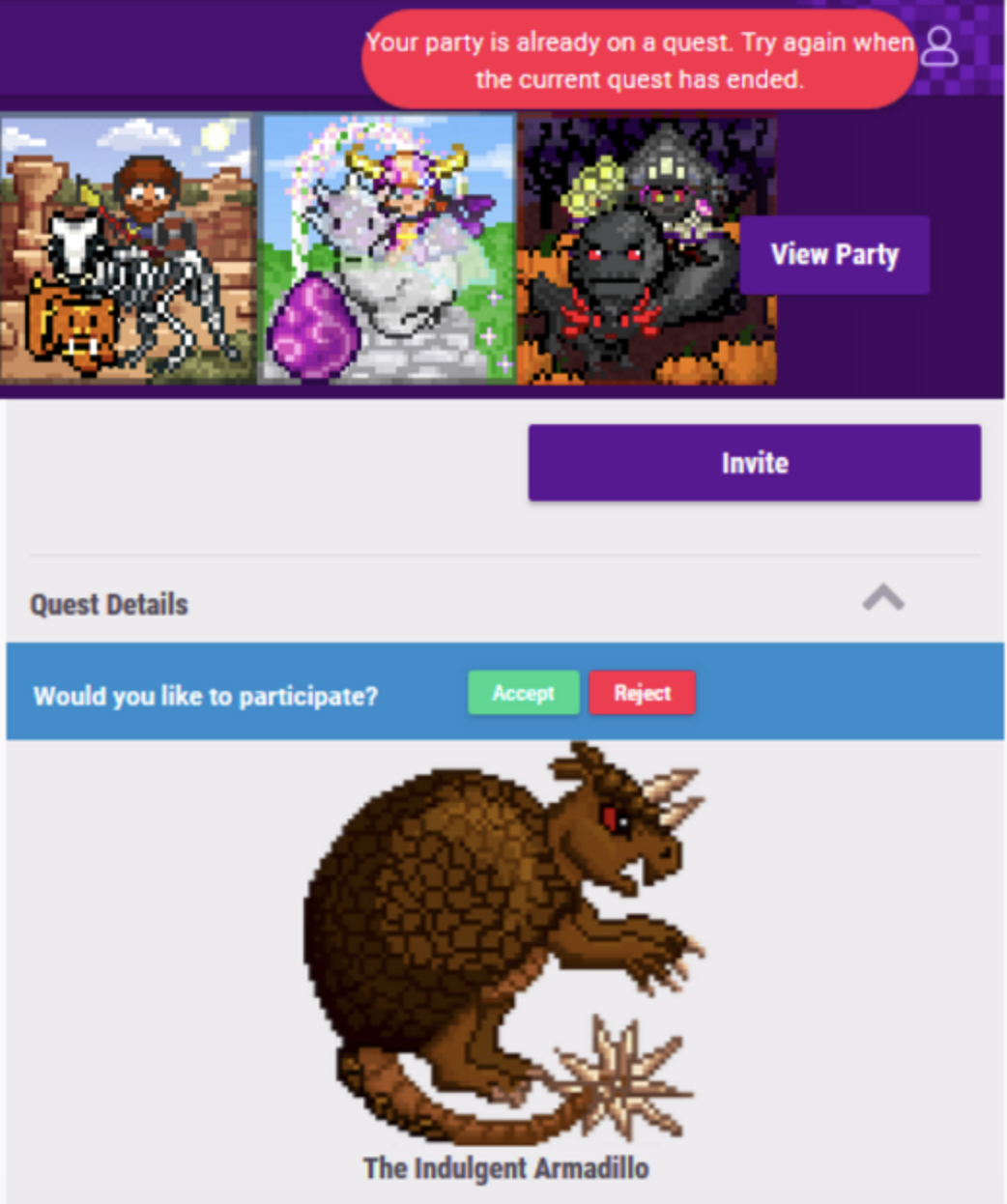
9am - Check my app to see my schedule. In fact, you can access the app as an add-on on Canvas and sync your learning activities too. Oh, it seems I have a group project, 3 other people and me just get assigned to the same gang and need to go on a trip to fight off midterm monsters. Our group meets on Zoom and breaks down the labor into our own individual to do lists. The professors can always check the progress bar of each individual group member.
 |

5pm - Get a question on the assignment. After signing into Canvas discussion board, I find out another person just posts a similar question. We discuss the issue for a little bit and then mark the thread as “solved”. We both get some coins for our contribution in bringing up and solving the problem, and now, I have enough coins to redeem an online course series on Lynda. Though my school has already paid for the subscription, I still have to work to earn it (of course, it’s not hard to earn those coins at all if you participate in classes and assignments meaningfully).
Why Gamification?
I’ve heard many negative views about technology and social media, about how it wastes our time, deprives our attention, and alters our mind to make us seek for immediate gratification. However, what if we use the power of online media to boost our productivity? I believe it is possible to achieve with the help of gamification and social encouragement.
What is this gamification, then? According to the definition from Oxford dictionary, gamification is “the application of typical elements of game playing (e.g. point scoring, competition with others, rules of play) to other areas of activity, typically as an online marketing technique to encourage engagement with a product or service.” Basically, you implement the elements in game design into other activities to make them more fun.
If you want to know more about gamification, the following is a very helpful video that provides a great introduction by walking through the definition and the history of its development.
User Engagement
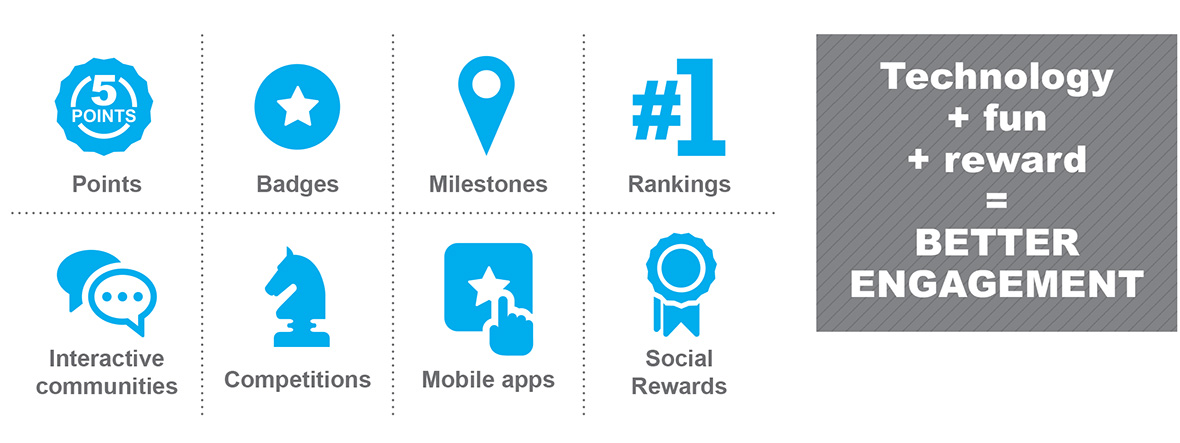
By combining gamification with educational platforms like Canvas and Lynda, we can motivate learning by offering social and virtual rewards. People are attracted to the learning activities not only because they are asked to do so, but also, their learning are now powered by the social recognition of their alter-selves in the gamified setting.So what do they do? They can level up their avatars and buy accessories with in-game currencies, compare and compete with others’ in-game status, and collaborate together to complete missions. Of course, to fully utilize the gamified community, the students should equip themselves with the necessary literacies, such as foundational, critical, media and multi-literacies, as they need to use the technology to search and interact with the information, evaluate others' posts and comments, understand the game and platform interfaces, and synchronize their activities across different tools and platforms.
Avatar as an Alternate Self-Representation
I find constructing an identity without physical “gating features” (in my case, it’s the shyness) is very helpful for an introvert like me to socialize with others. I actually enjoy the Goldilock’s effect of online social interaction, because it’s a step forward rather than backward.
Fun Fact: Goldilock’s effect in communication refers to the situation that when people communicate, they don’t want to be too close or distant, but just right so that the connections and interactions feel controllable.
Online role-playing will make the participants more confident, because everyone has an equal chance to succeed in the well-designed gamified setting. All the inputs will be converted into outputs, which are represented as game stats. Therefore, as long as the students put in enough effort, they can actualize their hoped-self in this gamified setting via upgrading avatar, earning reputations and increasing their stats. The results are visible to everyone.
So now you might ask, what types of users are in here? While the users are mainly e-learning students from different age groups, there might be power users like me as well as users who are less interested in expressing themselves in this way. However, it’s all about personal preferences. The extra motivator just serves as a little boost, and luckily, it doesn’t affect the teaching quality and other community functions already existing in the teaching platforms that it's embedded in.
 |
| A leveling Up Avatar. Ideally, by completing different types of coursework and participate in discussion, you can have a strong a stats to visualize your progress and show off. 😏 |
Learning More in MOOC
Most people consider MOOC less formal and thus treat it less seriously. Especially for the free open courses, the completion rate is extremely low as shown in the picture below. To improve it, in this PLE design, I actually adds a rule -- we have to earn the courses by contributing to the community. In this case, MOOC courses themselves are rewards to your learning efforts, and they can help you learn even more (and earn even more points!). Now, my brain values the class a lot more than just a course offered by my school for free, so I wouldn’t give up the courses so easily. It's actually a very useful psychological trick!
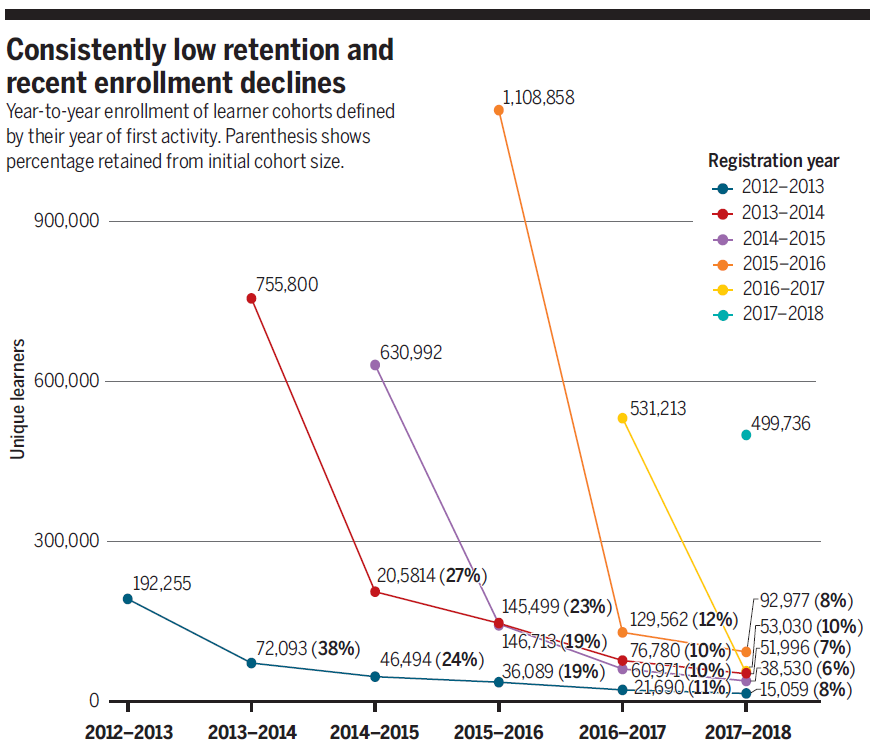
The gamified mechanism will help retain users to keep all the communities involved in this PLE to grow. Because the benefits tie directly to one’s own well-being or mental enrichment, people might be very motivated to continue using this gamified system and the related platforms. They can compete with their friends in building habits and accomplishing learning goals. As stated before, the rewards for making contributions are in-game currencies that can be turned into social reputation (avatar upgrades) and real learning experience (MOOC). These meaningful and useful rewards will encourage users to continue their investments (and to get more from it!).
This is a really great to showcase the user experience through out the day.
ReplyDeleteYour gameified experience and immersive story lines made mundane learning tasks feel much more exciting and engaging.
Great idea about integrating Canvas. It will help onboard users right away. As Malinen discusses, this is one of the biggest hurdles to online communities. while you describe a PLE, I could see it growing into a full gamified community.
Hi Nincong:
ReplyDeleteReally interesting post. I like your “outside the box” thinking in using gamification as a tool of motivation for OC’s and PLE’s like MOOCs and Canvas. I’m not a fan of MOOCs myself, so adding your ideas would definitely create a more interesting environment for me. My only counterpoint to your idea is that I feel at a certain point of development, the gamification concept might not have the desired effect on more advanced learners. From my own perspective, at this point in my life, adding gamification to a MOOC would not be enough to motivate me to take the course. I would only do it if completing the course gave me some kind of real world benefit or reward. When I was younger, I feel like gamification would have had more of an effect on me. That being said, I could be wrong! Perhaps this idea would catch on, and it may have different results in different cultures as well.
Cool post!